

Climate Migration in Morocco: “We Left, But We Did Not Let Go”
Lives Reshaped Between Land and City
When we arrived, Warda was sitting.
She was not simply sitting on a rooftop in Casablanca. She was sitting between two lives, one that drought had taken from her, and another that the city had never fully given back. Warda is the story of an immigrant woman forced to leave her land. Like a flower, she once belonged to the soil that gave her life. But when drought touched her homeland, Warda slowly withered too. Her journey is not only about leaving a place, but about losing the roots that once made her bloom.
The space around her was small and exposed, a rooftop divided into a larger room, a smaller one beside it, and a narrow corner arranged as a kitchen. Below it, the building rose from the dense streets of Bouchentouf, in Derb Sultan, where the city does not open itself all at once but climbs floor by floor, a dark stairwell, damp walls, doors half-closed, children’s voices, the smell of cooking oil, a radio playing somewhere, footsteps passing too close. Casablanca was not a skyline from there, it was pressure. It came up through the stairs, through the heat, through the noise that never fully stopped. The roof above was made of zinc sheets, slightly bent in places, holding the heat of the day long after the sun had begun to disappear. A plastic chair sat near the edge. A thin mattress was folded in the corner. A few containers were stacked beside a bag. Nothing had been arranged to suggest permanence, yet everything showed the effort of staying, the kitchen corner, the stored water, the objects kept within reach, the careful use of every meter. It felt temporary, even if it had been that way for years.
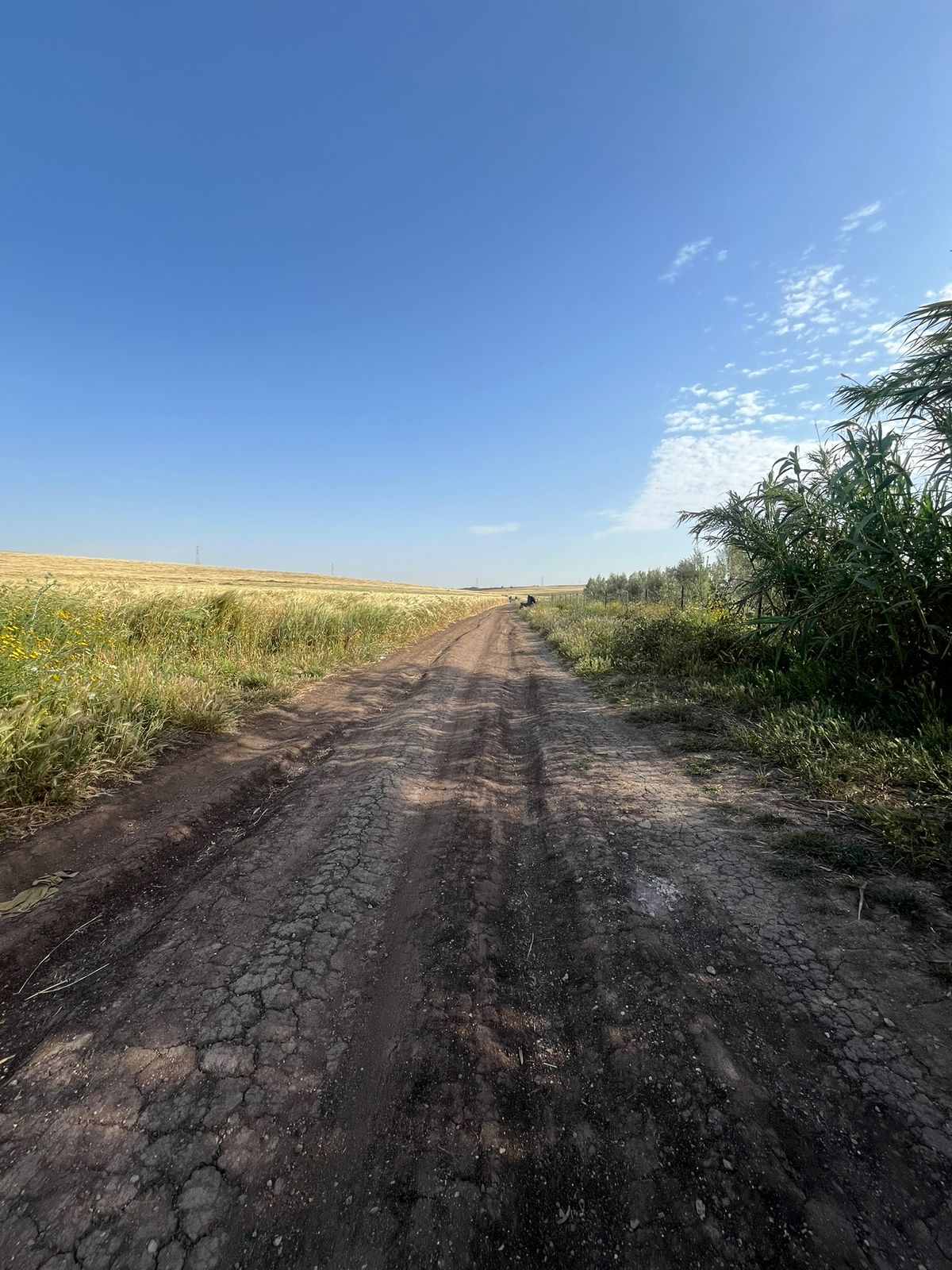
Before Casablanca, Warda and her small family lived in Douar Kritat, a rural area about 60 kilometers from the city. The distance sounds small, almost administrative, but it marked a complete change of world. There, life did not move by traffic, rent, appointments, or the noise rising from stairwells. It moved through land, through animals, through the road to the souk, through the weight of water, the timing of heat, the price of grain, the strength of a donkey, and the fragile calculation that every rural household knows without writing it down. How much can be taken from the land before the next rain decides everything again. Douar Kritat was not simply where they lived, it was the system that held them together.
“We had land,” she said. “Small, but ours. It was enough.”
Enough. The word carried more than food. It meant work, rhythm, animals, seasonal labor, family effort, and the right to remain where life made sense.
Before the City
They lived in a khayma, which she described as a house made of rock and clay. They had a donkey. She worked all the time, with her husband on the land, and with other people when there was work. The nearest market was four kilometers away : “I walked in the morning to the souk,” she said. “And came back before it got too hot.”
Warda had a rhythm and a lifestyle. Life moved in a way that made sense to her .Then that rhythm began to break, “At first, there was less rain,” she said. “Then less again.”
“Drought took the harvest first. Then it took the road back.”
The change did not arrive suddenly. It slowly crawled into their lives . “The land changed,” she said. “It stopped giving the same.”
Harvests became weaker, and some seasons produced almost nothing. Work became irregular, but they did not leave. They hoped the next year would be better.
“We thought rain would come back ”, she said.
They stayed and waited. One season passed, then another. Nothing changed, but life was getting harder and harder. The land was still their only source of life.
A Country of Movement
Morocco has long been shaped by movements. Migration is not new; it is part of the country’s history. Over time, waves of displacement have followed moments of crisis: famine, environmental shocks, and drought. Each episode has left its mark on how people live, where they settle, and how communities evolve.
This movement now has measurable climate pressure behind it. World Bank projections estimate that Morocco could have around 1.9 million internal climate migrants by 2050 under a pessimistic scenario. The pressure is especially strong in areas dependent on rainfed agriculture, water access, and fragile rural livelihoods. These figures do not replace stories like Warda’s. They give them scale.
Today, that history is resurfacing in a more visible form, climate migration. It appears across the country, along riverbanks, near coastal zones, and in regions repeatedly hit by drought. These movements follow cycles, returning every few years as environmental conditions become harder to sustain. Drought is the central driver.
Migration often begins inside the household: one person leaves first, then the family follows when rural income can no longer sustain them. Crop yields decline, livestock weakens, and income disappears.
Warda’s story shows that climate migration is not only a demographic movement from rural areas to cities. It is also a change in the relationship between people and land. Drought does not simply remove income, it breaks the practical system that made rural life possible: rain, harvest, animals, seasonal work, family labor, and local markets. When one part fails, the rest begins to weaken.
The Land That Stayed Behind
Back in Douar Kritat, that attachment had a practical consequence. Her husband refused to sell the land. “He said it is our origin,” she explained. “You don’t sell that.” She did not argue with him. She understood what he meant. But understanding does not change reality.
The city gave them a roof, but the land still held their life.
Eventually, they left. Casablanca gave them shelter, but not stability.
At first, they stayed with her sister, Zahra. Her husband looked for work wherever he could find it : construction, carrying materials, helping on small jobs. Some days he found something. Some days he did not.
Warda tried to work too. She helped her sister when she could. But one day, her body failed her.
“I fell,” she said.
She lost consciousness and remained that way for eleven days. When she woke up, the doctors told her she had high blood pressure and diabetes.
“Now I stay here,” she said.
From the rooftop, Casablanca continues moving. Voices rise from below. Shops open and close. Life moves. But for her, everything has narrowed to that space.
“My son,” she said.
He had left years ago. She had not heard from him since. “I know he will come back,” she said. “He will find the way.” His name was Mohamed. I asked her about the land. Why hadn’t they sold it ?
“We are waiting for our son,” she said.
For her, the land was not done with them. It remained part of an unfinished story.
For women like Warda, migration also changes the scale of daily life. Work that once moved between land, animals, market, and household becomes confined to rooms, rooftops, medical appointments, and waiting.
Climate Migration Is Not a Single Event
Back on the rooftop in Casablanca, Warda sits quietly, but part of her life remains elsewhere, in a place that no longer sustains her, but still holds her.
In interviews and field observations, climate change appears less as an abstract future threat than as a disruption of ordinary routines: when to plant, where to graze, how much water to store, whether a son should leave first, whether land should be kept or sold.
Droughts have become more frequent. Rainfall more unpredictable. What used to happen every five years now happens more often. Periods of scarcity are sometimes followed by sudden excess. Heavy rains come after long droughts, but the land cannot absorb them.
Climate change here is not only about lack. It is about imbalance.
In rural areas, agriculture becomes less reliable. In pastoral regions, grazing land diminishes. Among nomadic communities, traditional mobility patterns, once aligned with seasonal rhythms, become harder to maintain. Before leaving, many people first reduce, adjust, and wait.
One departure leads to another. Temporary movement often becomes permanent.
Recent labour data also shows how climate pressure enters the economy. In 2024, Morocco’s agricultural, forestry and fishing sector lost 137,000 jobs, while rural employment declined by 80,000 jobs, according to the HCP. These numbers help explain why drought does not only affect harvests. It weakens the work system around them: seasonal labour, livestock, market exchange, and household income.
The City Absorbs, But Does Not Resolve
In cities, the consequences continue.
Newcomers enter informal work. Street vending, seasonal labor, small services. These are less opportunities than forms of adaptation. They reflect the need to survive rather than the promise of stability. The city absorbs movement. But it does not resolve it.
The CESE has repeatedly pointed to the persistence of territorial inequalities between rural and urban Morocco, especially in access to services, infrastructure, employment, and development opportunities. For families arriving from rural areas, the city offers proximity to work, hospitals, and markets, but often through fragile forms of survival rather than stable integration.
Many newcomers arrive with skills tied to land, animals, seasons, water, and rural labor. But in the city, those skills do not always translate into stable work. What waits instead is uncertainty: selling in markets, guarding bicycles, or working in small services.
For families like Warda’s, migration does not mean arrival. It means another form of waiting. Waiting for work. Waiting for health to improve. Waiting for a son to return. Waiting for rain to bring the land back to life.
Between Leaving and Staying
The line between leaving and staying remains unclear. People leave, but they remain connected. They adapt, but they do not fully detach.
Warda had left Douar Kritat, but she still spoke of the land in the present tense. The land is there. Her son will come back. He will find the way.
This is what makes climate migration difficult to measure only through numbers. It is not only about how many people move. It is also about what remains behind, what remains unfinished, and what continues to live inside those who leave.
When we left, the light had almost disappeared. The heat had begun to fade. The city below was becoming louder again. But on the rooftop, everything remained still. Warda did not move. She stayed seated, between what had been and what might still return. And in that space, between leaving and staying, between past and future, her story lives not only in movement, but in everything movement leaves unfinished.
Leaving was not the hardest part. The hardest part was still belonging to what could no longer keep them alive.
Other Faces of Environmental Migration
Warda’s story is not isolated. It reflects a broader pattern across the country. But environmental migration does not always look the same.
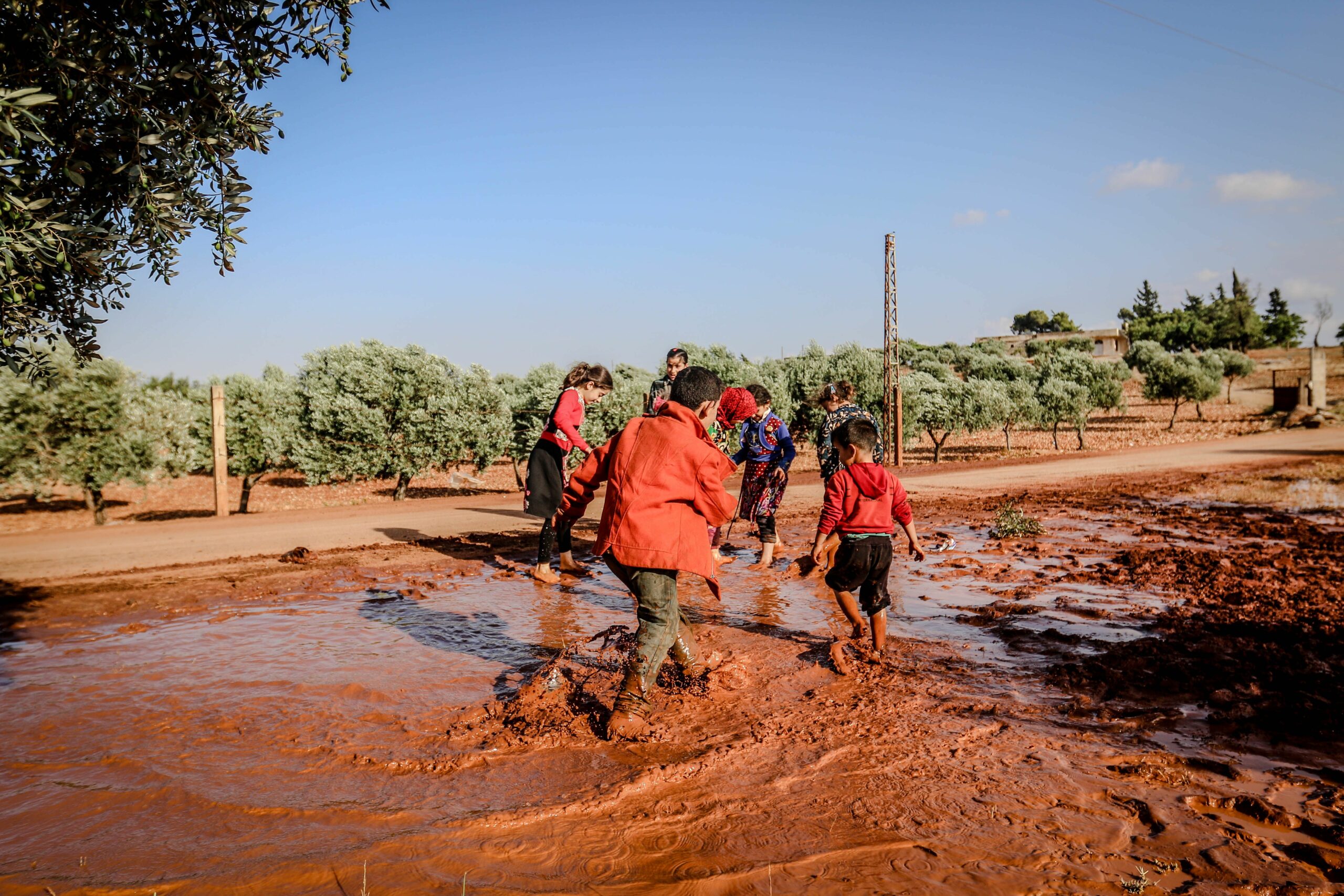
In Ksar El Kebir, flooding introduced another kind of movement. Sudden. Unplanned. Unlike drought, which pushes people slowly, floods can force a family to leave in a single day, sometimes in a single hour, without knowing what will still be standing when they return.
What the water left behind was not only mud. It exposed the city’s weak points. According to environmental activist Mehdi Sbai, waste collection was already fragile before the floods; afterward, the limits became harder to ignore. Some neighborhoods did not have enough containers. Garbage accumulated quickly. Informal dumping spread. Workers spoke of limited equipment, while residents complained of pollution, bad smells, and the absence of an effective response.
Here, the trigger is not the collapse of agriculture. It is the erosion of living conditions. Flooding does not create every problem it reveals; it passes through streets, houses, waste systems, and public services, showing where the city had already been failing. What pushes people, then, is not always one dramatic event. Sometimes it is the accumulation around it: water, damaged homes, weak infrastructure, pollution, fatigue. A city can become difficult to stay in long before leaving becomes visible.
In southern Morocco, change does not always arrive as disaster. Sometimes it comes slowly, almost quietly, until one day a place no longer feels like itself. That is what is happening in the oases.
An oasis is not only water in a dry place. It is a relationship between people and scarcity, between land and labor, between survival and memory. Dounia Mssefer’s reporting describes places where water scarcity has changed not only agriculture, but also the emotional relation between people and land. In Skoura and Figuig, residents speak of water as memory, inheritance, and survival. One voice from Figuig says it simply: “Water is life. Water is us.”
The decline of water affects work, income, and daily life. As agriculture weakens, families become more vulnerable. Some rely more on remittances. Others begin to consider leaving. Others stay because the oasis is not only a place of work; it is the form their life has taken.
People are divided between those who have left, those who are thinking about it, and those who remain deeply attached to their land. It is a tension between attachment and necessity. Environmental migration is social.
Warda’s story, Ksar El Kebir’s floods, and the slow exhaustion of the oases do not describe the same kind of movement. One begins with drought, another with water, another with the disappearance of water. Yet they meet at the same point, people leave when a place can no longer protect the life built around it.
They had left. But they had not let go.
By Zineb Halifi
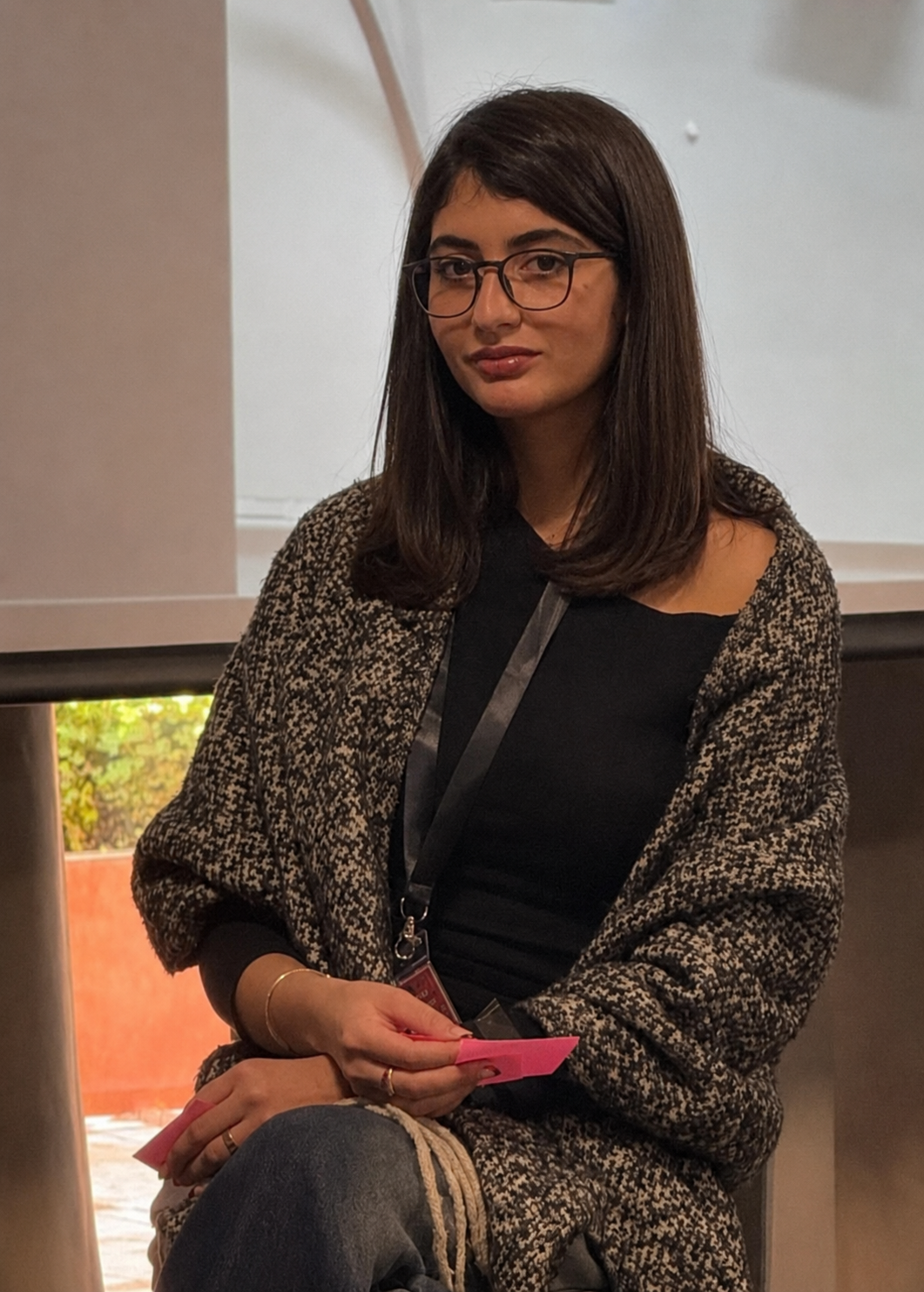 | Zineb Halifi was born in Casablanca and is an English teacher and researcher interested in environmental studies and ecocriticism. Her work explores climate issues, sustainability, and environmental awareness through literature and culture. She is particularly interested in the connection between language and ecological consciousness. Her research reflects a growing interest in climate and environmental humanities. |
| Ce texte a été réalisé dans le cadre de la session Storytelling pour les migrations, avec le soutien de l’Institut français du Maroc. À lire aussi sur Enass.ma. |  |