

Whose Pain Counts? Gynecological & Obstetric Violence in Morocco
A cold December night. Rain thundering against the hospital windows. The smell of bissara in a cramped corridor. “Sbri 3liya hta tyb lbissara », the midwife said, wait until the beans are cooked, while my mother’s contractions sharpened in a ward without enough hands. The beans and olive oil. The nauseating noises of an overcrowded maternity unit. Her pain ignored. These are the images that remain vivid in her mind.
The obstetrician never came. A midwife and two nameless women, maybe nurses, maybe cleaners, brought me into the world. Later that night, the doctor drifted in, loud with alcohol and singing Oum Kalthoum: “Mabrouk 3lik l’3azba.” We survived. Another patient, months later, did not. He left his shift early, a new mother hemorrhaged and died, uncared for. This is how silence grows, inside language that normalizes pain, inside systems that call women’s suffering “routine.” When I told my mother I wanted to write about gynecological and obstetrical violence, she told me the story of my birth for the first time.
Moustachfa Lmawt: “This is a cemetery, not a hospital.”
The urgency is not abstract. In the span of ten days of August 2025, eight women died at Hassan II Hospital in Agadir after C-sections.* Streets and screens filled with anger about the right to health. During Gen Z212 protests denouncing a “Maroc à deux vitesses,” and a public health system in crisis, yet another woman died in the same hospital ward. The question persists: why did pregnant women die? Which arrangements of power, in the hospital, in policy, and in everyday life, decided whose pain mattered, whose time counted, whose life could wait?
Structural shortages exacerbate the problem. In 2019 and in the public sector, Morocco had 456 gynecologists for 36 million people, about one per 38,750 women (Carte Sanitaire, ministère de la santé 2019). Health workers describe “around 40 deliveries a day in lamentable conditions, with 2 to 3 midwives and one obstetrician per 12-hour shift… midwives relying on cleaning staff to help during childbirth… perineal tears sutured in unhygienic conditions, leaving lasting damage.” (Cf. Gender in Geopolitics Institute)
“In 2025, on-call hasn’t improved; in some cases it even worsened because there are fewer gynecologists in the public health sector,” says Dr. Zouhair Lahna, obstetrician—gynecologist and pelvic surgeon, the activist-doctor and humanitarian often called “the doctor of hope,” known for repeated medical missions to areas with scarce care, including Gaza during the genocide. “Doctors end their shifts at 4 p.m., and for the evenings, provincial hospitals function like health centers: midwives are alone, phoning gynecologists. Any woman needing active management for cesarean, hemorrhage, obstructed labor, or fetal distress is sent to the regional hospital.”
Inside Hassan II, Souss-Massa’s referral center, the nickname is “Moustachfa l’mawt,” the hospital of death. “They beat me in labor,” says one woman who delivered there in 2000. “I hemorrhaged and they sent me home.” For her next two births, she delivered alone, “no one watching over me, I wanted to avoid living through that violence again.” Another recounts the ward itself: “l3fen, lwsekh. Sixty patients using two dirty squat toilets. I saw cats in the rooms, cockroaches at night. I brought my own cleaning products and anti-cockroach.” A third says she paid half of what staff demanded; after delivery another woman from the hospital staff “hit me, stepped on my foot, shouting for the rest. I was scared for my newborn daughter; I couldn’t sleep to keep an eye on her all night. This is a cemetery, not a hospital.” Another woman, her face covered on camera, said: “This hospital runs on tasmsart (bribes). It happened to me. I delivered three children here. They asked for 6,000–10,000 ryal: ‘hta ntfahem m3a rajlek 3ad nchoufou m3ak’ (we’ll only look after you once we’ve come to an arrangement with your husband).”**
“The public hospital is the maternity lifeline for people without means (those excluded from AMO or on solidarity AMO), easily over half the population, perhaps 70%. But shortages of staff and equipment—and at times a lack of basic humanity—leave poor, rural women poorly monitored. Many endure obstetric, verbal, and physical violence that begins as neglect and ends in serious complications. This is systemic failure: childbirth, maternal health, and newborn health must be treated as priorities,” explains Dr Lahna.
Malika, diverted from Inzegane to Agadir years ago, remembers a midwife forcing her fingers into her, causing her to bleed: “malna 3la had lhamajia, rah l7mi hadak” (why all this brutality, this is my flesh) and a delivery bed stained with blood. When she protested, the midwife snapped: “wach nti jaya tchrti? tl3i tweldi ila bagha tweldi.” (Are you here to haggle? Get up and give birth if you’re going to give birth.) She was pinched, yelled at: “mnin kathezzou rjlikoum katkounou fr7anin, daba katbou7to 3lina.” (When you spread your legs, you’re happy, now you come screaming at us) Newborns were washed in a dirty sink, families brought their own material: sutures, needles, and Betadine. Decades later, she, like many other women who underwent similar experiences, Malika remains traumatized: “Mazal kan7ess bel hegra, manmchich mazal lsbitar”, she says, “Makaynch l’insaniya”. (I still feel the humiliation. I still won’t go back to the hospital. There is no humanity) She wants ethical training and supervision, a professional and ethical conscience, so the next generation does not repeat this.
These are not isolated stories. Together, they begin to reveal a widespread pattern of gynecological and obstetric violence embedded in a broader continuum of violence against women and girls.
When Care Reproduces Patriarchy
Gynecological and obstetrical violence (GOV) isn’t only about birth. It is a spectrum that imprints women’s lives inside medical institutions: the hand that doesn’t ask, the consent made negotiable, the pain dismissed, the sexuality shamed and criminalized. It is the nurse who says, “Endure, this is what women are made for.” The receptionist who decides your wait because you came without a husband. The law that strips you of your body.
Feminist movements define GOV as a range of harmful practices during gynecological and obstetric care: physical violence (hitting, rough handling, slapping, pinching), sexual abuse by health professionals, verbal abuse (yelling, insults, humiliation, sexist or stigmatizing language), procedures without informed consent, neglect and delays, and unnecessary interventions. Often dismissed or trivialized, they nonetheless cut into the right to health, life, dignity, and bodily integrity. Medical hierarchies frequently minimize women’s pain, doubt their accounts, and cast them as less deserving of care. These violences sit at the intersection of gender-based violence (targeting women because they are women) and institutional violence (rooted in structural power within established systems). It is both gender injustice and a public-health crisis.*** As feminist legal scholar Marie-Hélène Lahaye notes, “the body of a pregnant or treated woman is not seen as her own, but as a tool at the disposal of medicine.”
Patriarchal structures in healthcare and society perpetuate this harm, as power over women’s bodies is exercised by systems, institutions, and individuals. Stigma around sexuality, and outright criminalization (sex outside marriage, same-sex relations, abortion), falls hardest on marginalized groups such as single women, women with disabilities, women living with HIV, and LBTQ+ women. Stark socio-economic divides between private and public care, and between urban and rural facilities, mean women and girls outside cities and in poorer neighborhoods are more likely to be mistreated, abused, and sometimes killed. Intersecting oppressions compound vulnerability; accessing care becomes a traumatizing experience of marginalization. Recognizing this violence is crucial because its impacts run deep: psychological trauma, chronic pain, disruption of the mother–infant bond, long-term avoidance of gynecological care, and a loss of trust in health institutions.
Who Bleeds for the System
Data collected by 100% Mamans in six cities show that 422 of 1,425 single mothers (29.6%) reported violence before, during, or after childbirth perpetrated by healthcare staff. Among them, 7.6% reported physical violence, and 22% reported insults, moral judgment, or stigma tied to their status as single mothers. Rural rates are alarming: in Khenifra, 15 of 17 single mothers supported by the Anir association (88.3%) reported verbal and physical violence. In Ouarzazate, 7 of 10 accompanied by the FLDF reported violence in the hospital (70%) (cf. 100% Mamans).
A social worker denounces the discriminatory treatment of single mothers by medical staff:
“Single mothers face double violence: verbal and psychological abuse. They’re left waiting in isolated areas, neglected, told not to express pain because they’re ‘responsible’ for their pregnancy. As someone who accompanies them, I feel this violence too. At the provincial hospital, staff used every name to label them ‘lfaalat’, ‘tarkat’, ‘kayhezzo rejlihom wyjiw 3andna’.”
The criminalization of sex outside marriage, plus patriarchal norms, pushes single women further to the edge, making them vulnerable to abuses:
“As an unmarried woman with an active sex life, I’ve faced humiliating situations, even in the private sector. In the waiting room, the assistant asks out loud: ‘Mzwja?’ Are you married? Not being married doesn’t make me less legitimate to be here. I’ve endured moralizing or religious lectures that have no place in a clinic.
The worst was during a transvaginal ultrasound. The male gynecologist said I wasn’t ‘wass3a’, that my boyfriend ‘wasn’t performing enough’ ‘had s7aybek 3yane mamhlich fik’ then told me to relax because ‘with his tool, he could make me orgasm.’ He refused to remove the probe between my thighs. I fought him off and left. It felt like a rape scene. I couldn’t even talk about it to anyone. I experienced it as sexual assault, as an inner collapse. It wasn’t just an inappropriate gesture, I don’t even know how to describe it, and even more so because it came from a doctor, someone supposed to care, listen, and protect. That betrayal is what marked me most, because I didn’t see it coming! I had other medical worries and needed reassurance, but the very place where I should have been safe became a space of domination, shame, and fear.” (Testimony of Salma)
Another testimony of a social worker who accompanied undocumented sub-Saharan migrant women in Casablanca recalls:
“We had no official agreement with the Ministry of Health, so we depended on the goodwill of the staff at CHU Ibn Rochd. I often accompanied pregnant women to the hospital and dealt with the head of the gynecology department, who was “nice”, but not always. One day he found me in another department; we were waiting in line with one of the migrant women I was assisting. He was doing rounds with his med students and ordered me to get on the exam table and open my legs so the students could “see what’s inside me.” I couldn’t say no because he had power over me; I was afraid of the consequences for the women I accompanied and for my work. I was young, without the maturity I have today, and he saw that vulnerability and used it against me. I experienced this as sexual assault and abuse of power; it marked me deeply.” (Testimony of Amal)
The lack of consent, the abuse, the denigrating treatment are symptomatic of a medical hierarchy that rids women of their bodily autonomy, of their dignity and humanity. This hierarchy is imbued with power relationships that place doctors as all-knowing and their patients as passive receivers of care.
The law can turn care into a checkpoint. Clandestine abortions push women into danger:
“After a clandestine abortion with pills, I had heavy bleeding and my condition quickly worsened: I was losing blood, exhausted, unable to eat, with incessant diarrhea. For a week, nothing improved. And because the law forbids it, society judges, the partner shirks responsibility, and medical staff often lack compassion, I found myself alone managing all of it… wearing adult diapers.” Testimony of Salma
In Morocco, medically supervised abortion is permitted when a married mother’s health is at risk, and only if her husband authorizes it. Unwanted pregnancies outside marriage collide with Article 490, criminalizing women rather than protecting them. An estimated 72% of abortions in Morocco are unsafe (cf. AMPF-Y-Peer). The legal system authorizes abortion only in “morally acceptable” circumstances, while sidelining it as a reproductive right. Unmedically supervised abortions often fail and result in very high maternal mortality. The consequences are written in blood and statistics.
The World Health Organization published a study that shows more than one-third of women in four lower-income countries experienced mistreatment during childbirth in health facilities. Younger, less-educated women were found to be the most at risk of mistreatment, which can include physical and verbal abuse, stigmatization and discrimination, medical procedures conducted without their consent, use of force during procedures, and abandonment or neglect by health care workers.
The systemic disparities between rural and urban healthcare services further deepen the suffering of women and newborns for women already at the margins: “Morocco runs at many speeds. At one end, private patients get full coverage and hyper-medicalized monitoring, some clinics report 80–90% C-sections. But a C-section is major surgery; it should never be routine. At the other end, necessary C-sections go undone in rural areas. Women deliver in health posts, and when complications hit, transfers to provincial, regional, or CHU hospitals stall, no ambulance, no fuel, no money. I’ve even heard that in some cases, to get a communal ambulance, officials look at the husband’s political affiliation; if he is from the other side, they don’t grant the ambulance. This is life-and-death care. Every woman should have a reliable, free transfer system to prevent maternal and neonatal deaths.” explains Dr Lahna.
You might ask: where is the data? Research on GOV in Morocco is scarce, kept at the margins of public policy and scientific inquiry. That silence isn’t neutral; it signals how little women’s health and concerns are prioritized. And the silence isn’t empty. It’s crowded with private stories, everyday experiences told in confidence, held together by stitches and trauma, stories that never make it into surveys. We need data that we can act on. Actionable data can turn stories into patterns, and patterns into pressure for change.
Dignity First: Hospitals That Protect, Not Punish
When the system fails, it fails women first, and hardest, those already pushed to the edges. Respectful care starts from a simple premise: dignity and consent are not optional.
WHO recommends anchoring respectful maternity care in accountability, resources, and rights. Health systems must be answerable for mistreatment, adequately funded to deliver quality, accessible care, and guided by clear policies on women’s rights, while providers receive the training and support to treat every woman with compassion and dignity. In practice, this means redesigning labor wards around women’s needs privacy, curtains or doors, and space for a companion of choice throughout labor and birth; strengthening informed consent for every intervention, with plain-language explanations (Darija/Tamazight when needed) and the possibility to withdraw consent at any time; and mentoring and on-the-job support so midwives and obstetric teams can consistently deliver respectful, evidence-based care.
It also means building public demand for women-centered services that refuse any form of abuse, and enlisting professional associations (midwives, obstetricians, nurses) to promote respectful care, protect providers’ rights, and identify and report mistreatment so locally appropriate remedies are implemented. Protection must be built into the system. Complaint mechanisms need to be independent and safe, on-site and off-site, with protection from retaliation, and written decisions that lead to corrective action.
Accountability cannot end with blaming a midwife while the structure stays the same. Fixing this is also a matter of governance and spending priorities. Making the public hospital worthy of trust: clean, welcoming buildings, reliable care, early antenatal follow-up with routine screenings, prevention, and timely treatment, as Dr Lahna explains. None of this holds if people are working the impossible. Infrastructure alone won’t save lives. “Invest in people,” as Dr Lahna insists on a fair distribution of midwives, real training and incentives, staffing to safe levels, and decent pay so on-call is covered, and burnout doesn’t hollow out services. Fight corruption and the petty “tasmsart” that taxes the poor at the door. “The empowered already choose private care, poor, rural, often illiterate women cannot, so the system must protect them.” That means civil society, doctors, lawyers, and journalists standing with patients. “A society is judged by how it treats its most fragile. This is about our collective future. Women are the backbone of society, if we mistreat them, we abandon society itself”, concludes Dr Lahna.
Prevention should be anchored beyond hospitals, comprehensive sexuality education for all children and adolescents, and legal change are necessary, so consent, bodily autonomy, and reproductive rights are inscribed as rights for all. Ultimately, ending gynecological and obstetrical violence means changing what we believe about women’s autonomy, that women and girls have the right to live lives free from violence and, above all, a right to shape their own lives themselves and make their own decisions. Moroccan hospitals should aim stop reproducing patriarchy and start practicing health. “This is a cemetery, not a hospital.” Until no woman has to say that again, reform isn’t a luxury; it’s an emergency.
Sanae Alouazen
* Cf. Simon Roger, « Au Maroc, l’hôpital d’Agadir, symbole de la défaillance des services de santé publics dénoncée par la génération Z », Le Monde Afrique, 7 octobre 2025.
**Testimonites transcribed and translated from the following videos : https://www.youtube.com/watch?v=cXnrVNqaNAk&t=216s ; https://www.youtube.com/watch?v=vcwVQPgcMO8; https://www.youtube.com/watch?v=OsefWzDsDq0
*** International Planned Parenthood Federation – European Network (IPPF EN), « Gynaecological and Obstetric Violence : Policy Paper », July 2022 (PDF).
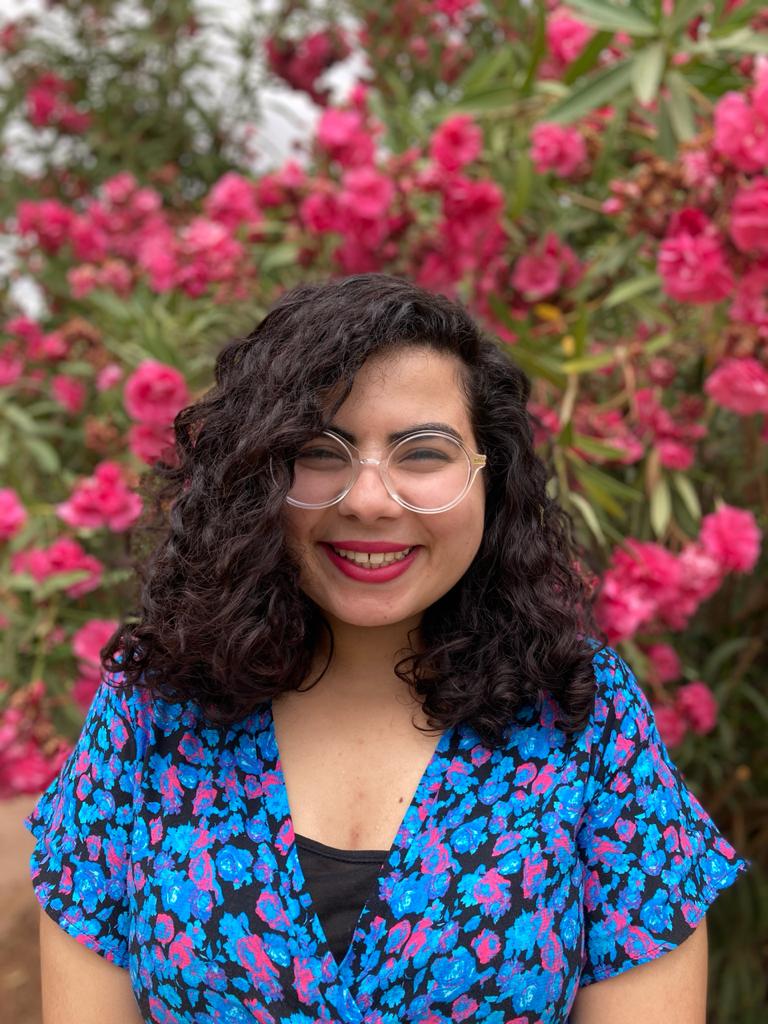 | Sanae Alouazen, is a project manager working in the human rights and feminist field and an independent researcher interested in gender issues and social justice. She holds a Master’s degree in Gender Studies from Central European University and a Bachelor’s degree in International Politics from the American University of Paris. |
| Ce texte a été réalisé dans le cadre de la session Storytelling pour l’égalité entre femmes et hommes, avec le soutien de l’Institut français du Maroc. À lire aussi en traduction arabe sur Enass.ma. |  |